
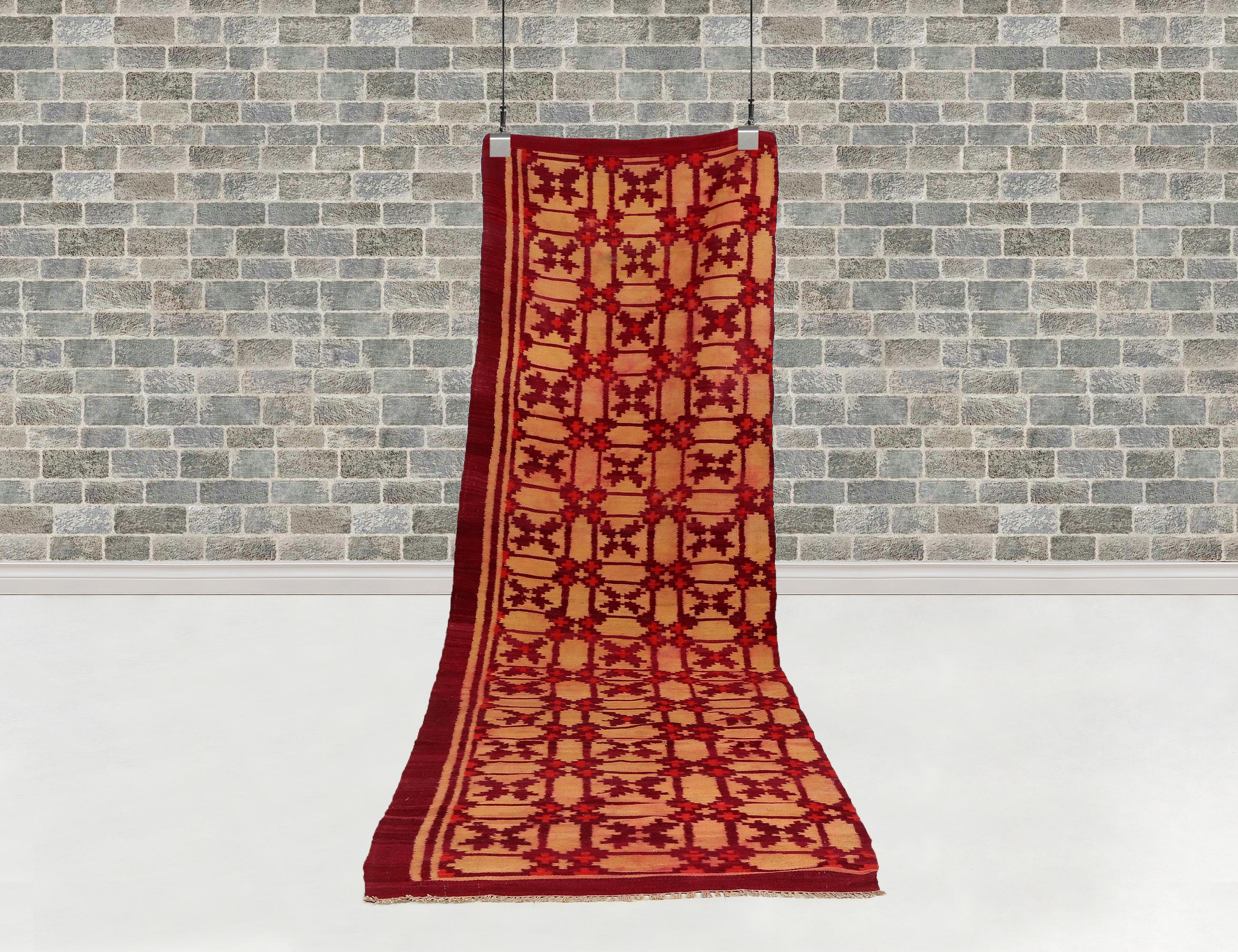
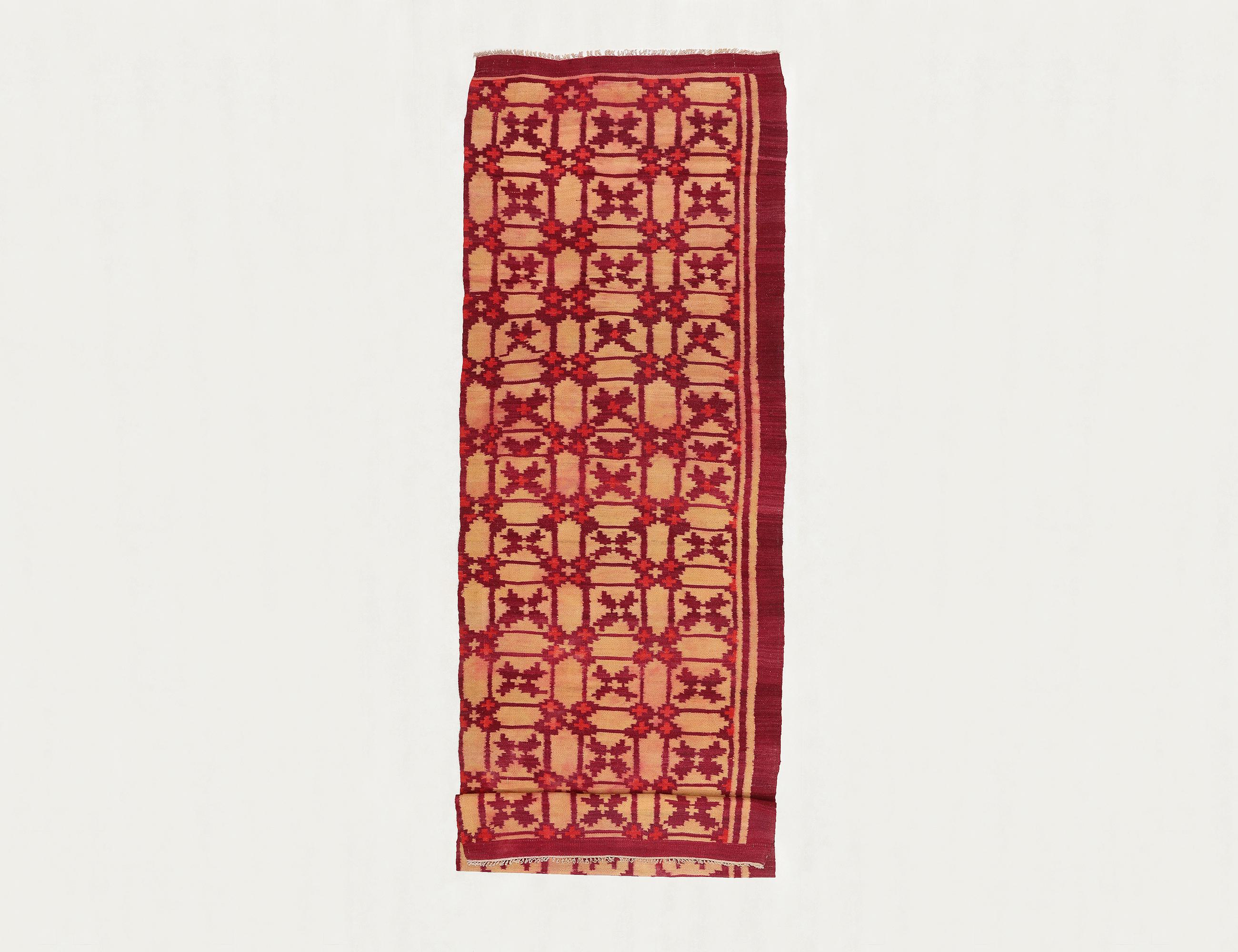
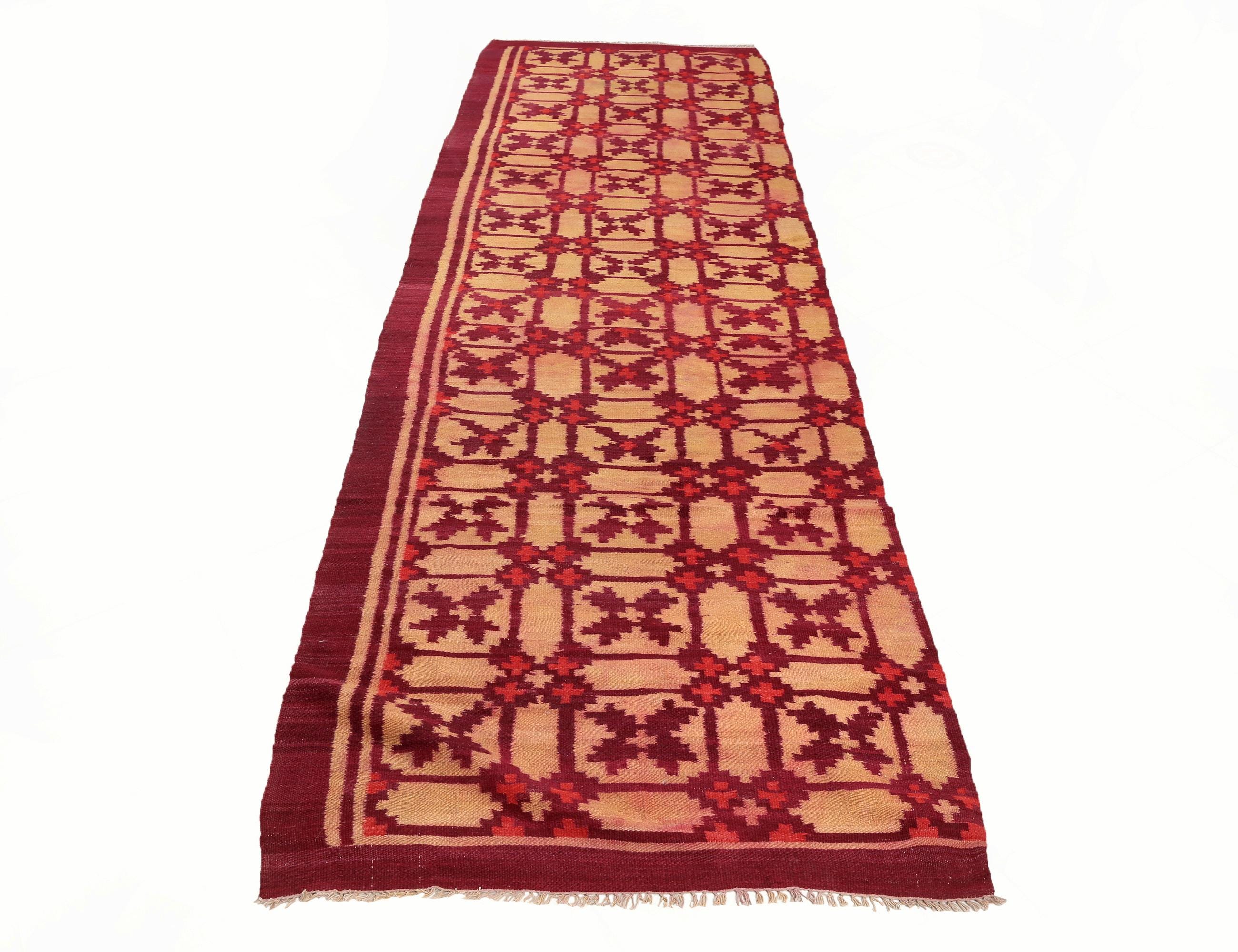
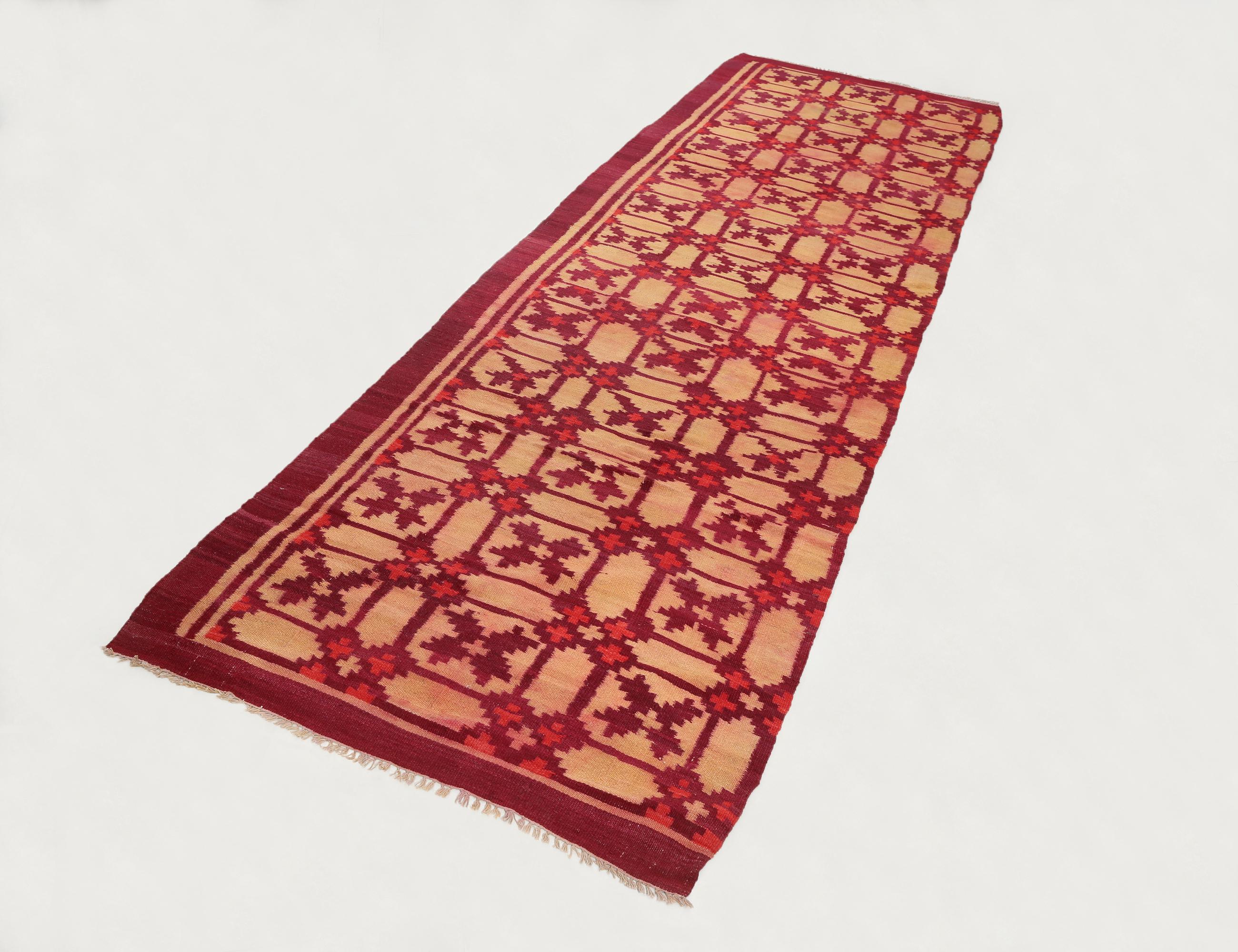
Vintage Kilim Runner 353 x 117 cm (11’7” x 3’10”) – Handwoven Wool Tribal Hallway Rug in Red & Camel Tones
$300.00 $750.00
This striking vintage runner is a genuine handwoven village kilim, created by tribal weavers in northern tribes. Its bold red-and-camel palette, rhythmic geometric repeats and subtle abrash (natural color variation) give it an unmistakably authentic character that machine-made rugs simply can’t imitate. At over 3.5 meters long, it’s the perfect statement piece for a hallway, entryway or long gallery wall.
Weaving tradition & structure
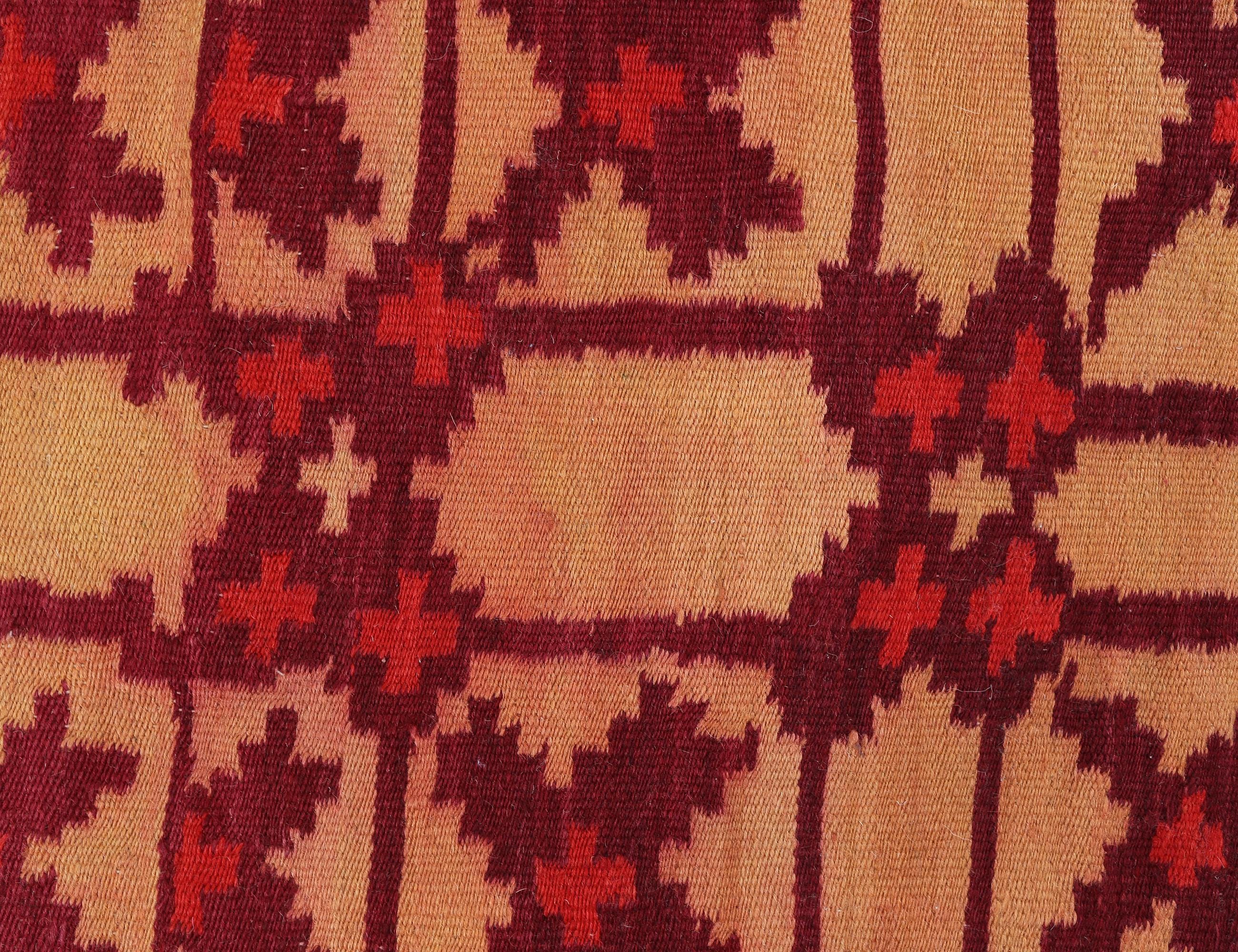
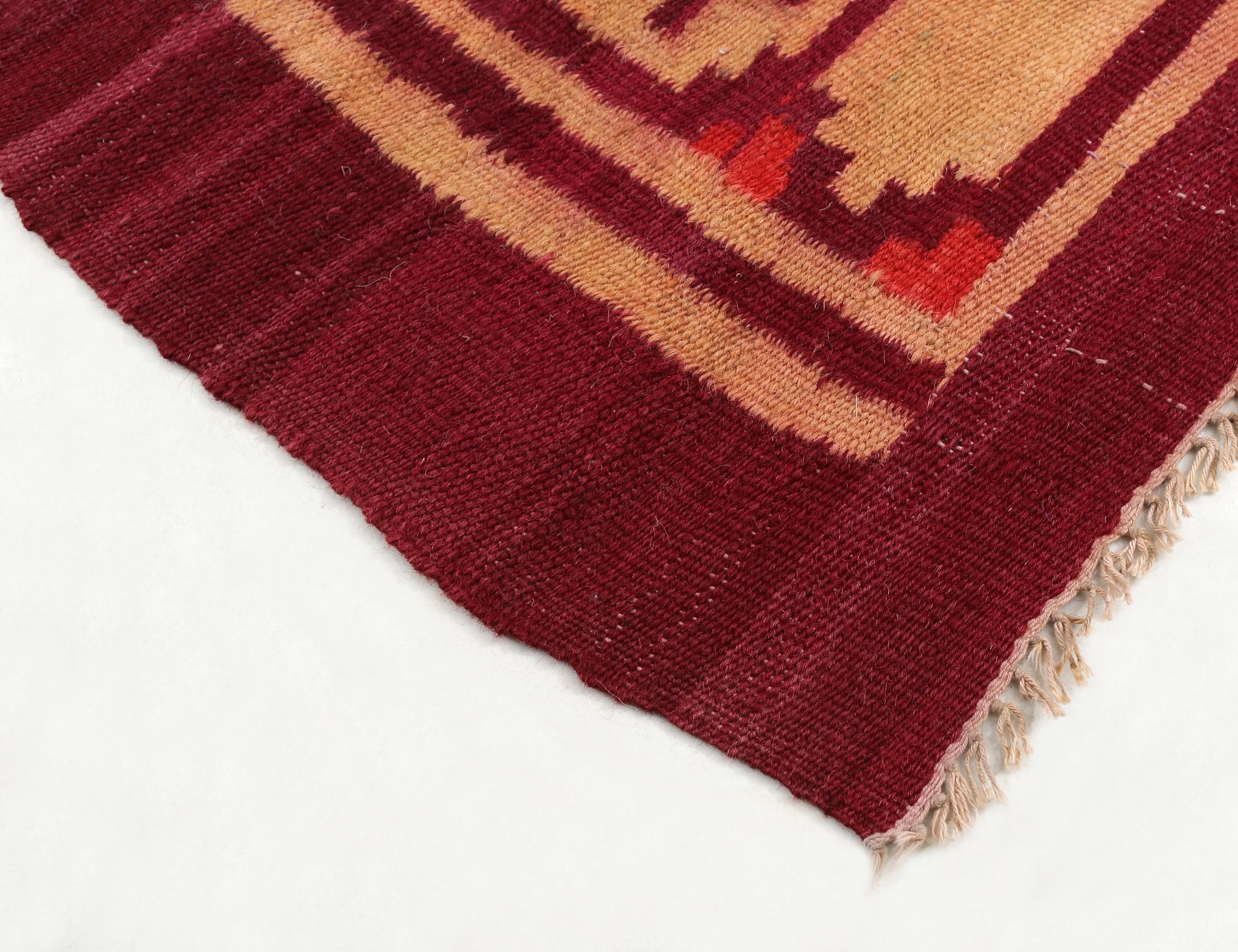
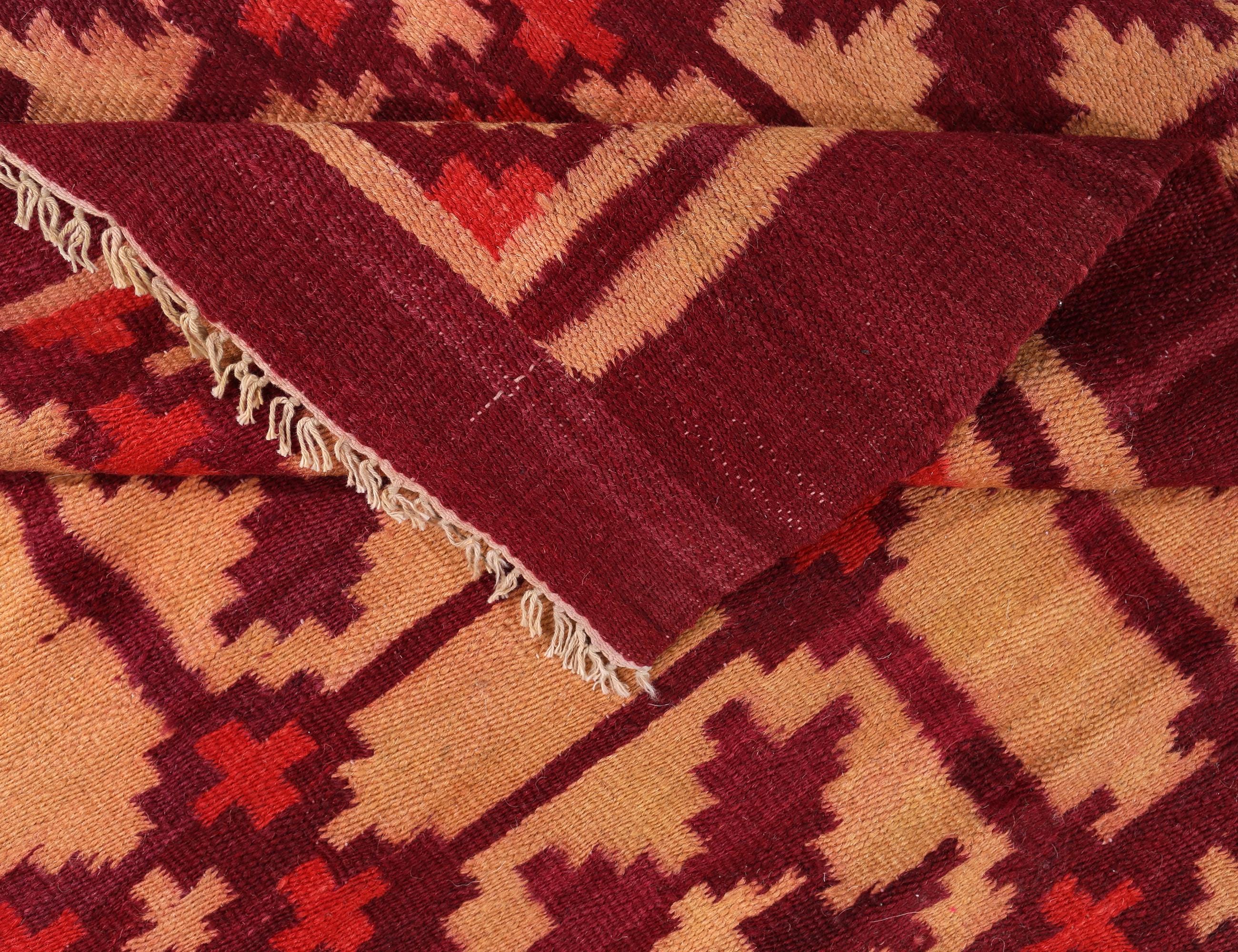
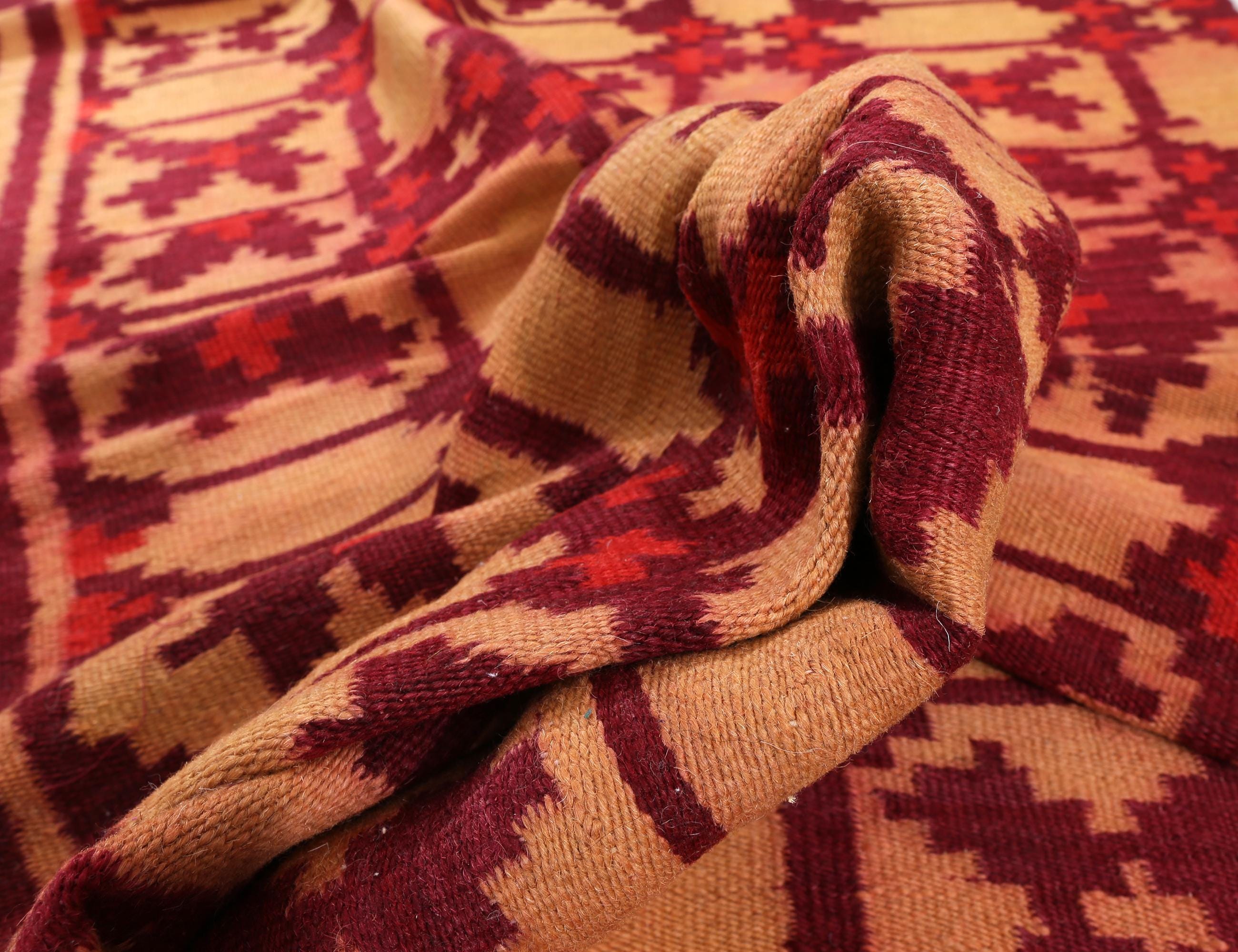
From the close-up photos you can see that this is a flat-weave kilim, not a pile rug. The design is formed by tightly packed wefts that completely cover the warps, with crisp vertical joins where color blocks meet – typical of slit-weave tapestry work. There are no cut pile knots visible on the surface or back, so knot type (Turkish vs. asymmetrical) does not apply here. The handle appears supple but strong, with enough thickness for floor use while still easy to fold and drape.
The foundation and face are both wool, consistent with traditional Afghan village weaving that relies on local hand-spun fleece. The soft sheen and light abrash in the camel ground suggest naturally dyed yarns, especially in the reds and terracotta tones.
Origin & age
The palette of saturated madder reds, soft camel, and brick tones, combined with the narrow runner format and dense all-over repeat, point strongly to northern Afghan tribal kilim work, woven in a village or nomadic context. Based on the even, low wear, gentle fading and overall construction quality, this piece likely dates from the late 20th century, around the 1980s–1990s. It has enough age to feel warm and vintage, but is still in very usable condition.
I do not see any maker’s signature; that’s typical for communal family weaving in this region.
Motifs & naqsha (design theory)
The entire field is laid out as a grid of repeating panels, each containing a central elongated cartouche flanked by four hooked cruciform motifs. These stepped, branching forms are classic tribal abstractions derived from:
Protection symbols / amulets – hooked and cross-like shapes are traditionally woven as guards against the evil eye.
Stylized plants – the repeated branching forms can also be read as trees or flower sprays, symbolizing growth and continuity.
The design logic is very disciplined: a central column of panels is framed by a continuous band of the same grid pattern, creating a “pathway” feeling down the center of the runner. The outer border uses narrow red bands that act as a visual frame and emphasize the length. This kind of repeating geometric naqsha is meant to create rhythmic movement along the length of a tent or corridor.
There are no overt religious inscriptions; all motifs are geometric and protective in nature.
Condition
Pile: flat weave; surface shows light age patina and some abrash, but no areas of heavy wear.
Edges: original side finishes intact, with only minor irregularities from handmade work.
Ends: fringes are short and slightly uneven from use, but overall secure.
Repairs: I do not see any obvious patches or later restorations in the photos.
Color: natural, mellowed reds and camel; some gentle, desirable variation from hand-dyed yarns.
Overall, I would describe the condition as very good vintage – structurally sound, with honest age that adds character rather than damage.
Features:
Type: Handwoven flat-weave kilim runner
Origin: Northern Afghanistan, tribal/village weaving
Age (approx.): c. 1980s–1990s
Size: 353 cm x 117 cm
approx. 11’7” x 3’10” (139" x 46")
Materials:
Warp: wool
Weft/face: wool
Weave: Slit-tapestry kilim (no pile)
Estimated weave density: ~30–40 weft rows per inch (typical for village kilims; not measured on a loom counter)
Pile height: Flat, around 2–3 mm total thickness
Colors: Madder red, deep burgundy, terracotta, camel, with subtle tonal variation (abrash)
Condition: Very good vintage; usable and durable with minor age patina
Extra-long 353 cm / 11’7” runner – ideal for hallways, corridors and gallery spaces
Authentic Afghan tribal kilim with traditional geometric protection motifs
Hand-spun wool and hand-dyed yarns with beautiful natural abrash
Reversible flat-weave construction – lightweight yet strong
Warm, saturated red palette that adds instant depth and coziness to a room
One-of-a-kind vintage piece; not a reproduction or factory rug
Care Instructions
Vacuum: Use a low-suction vacuum or a handheld attachment, suction-only (no beater bar) and vacuum in the direction of the weave.
Rotation: Rotate the runner every few months so wear and light exposure stay even.
Spills: Blot immediately with a clean, absorbent cloth. Avoid rubbing. For stubborn stains, use a small amount of mild wool detergent diluted in cool water and test in a corner first.
Cleaning: For a full wash, always use a professional cleaner experienced with handwoven wool rugs and kilims.
Padding: A good rug pad is recommended to prevent slipping, protect the fibers and add cushioning.
Storage: Store rolled (not folded) in a breathable cotton sheet, in a dry, well-ventilated area away from direct sunlight and moisture.
This vintage Afghan kilim runner is more than just a floor covering – it’s a long, woven story of tribal life, protection symbols and hand-dyed wool that has aged gracefully over decades. If you’re looking for a genuinely handmade piece with warmth, history and a dramatic length for your hallway or entry, this runner is a rare find.
Shipping from Pakistan
Processing time
5-7 business days
Customs and import taxes
Buyers are responsible for any customs and import taxes that may apply. I'm not responsible for delays due to customs.
Payment Options
Returns & Exchanges
I don't accept returns, exchanges, or cancellations
But please contact me if you have any problems with your order.