
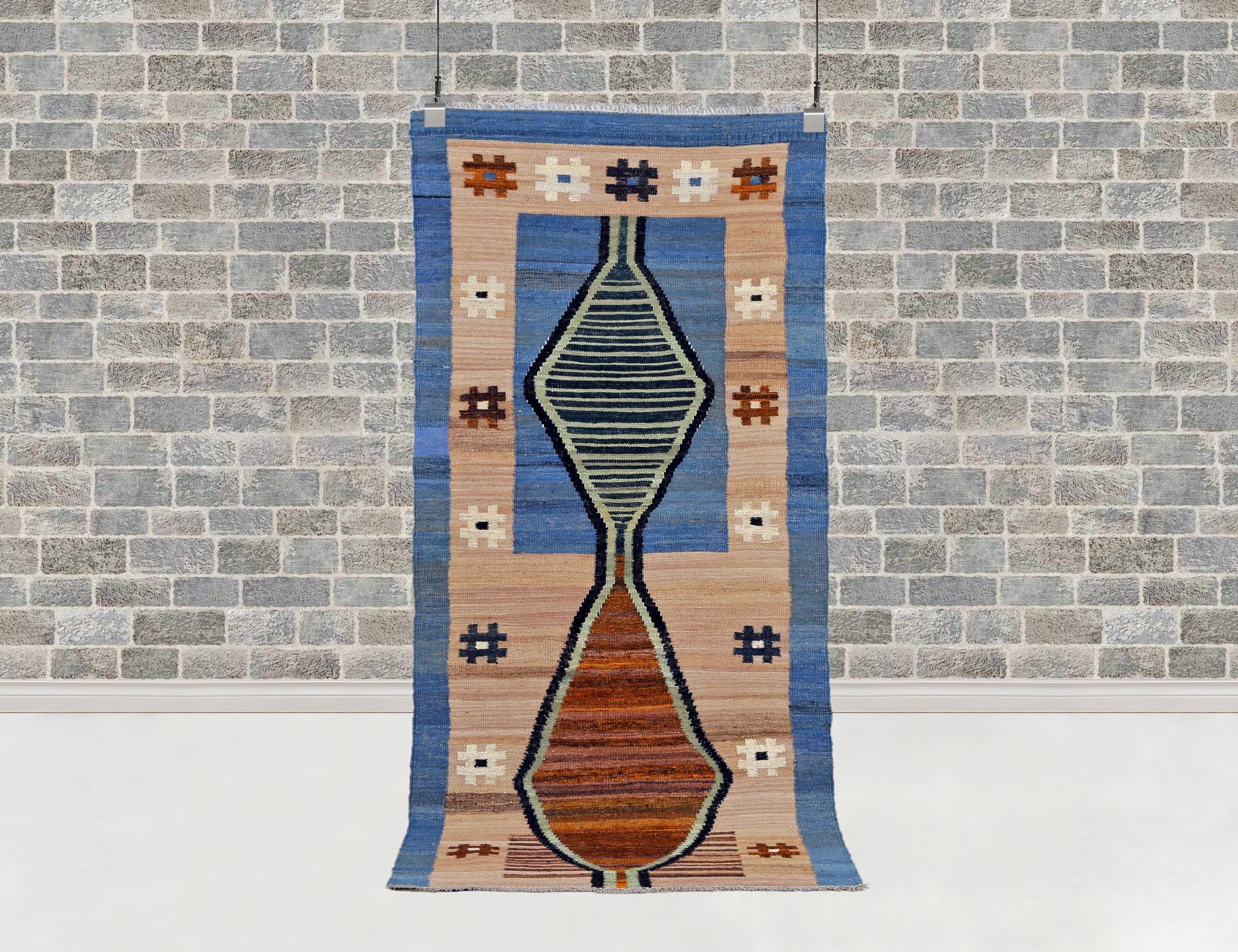
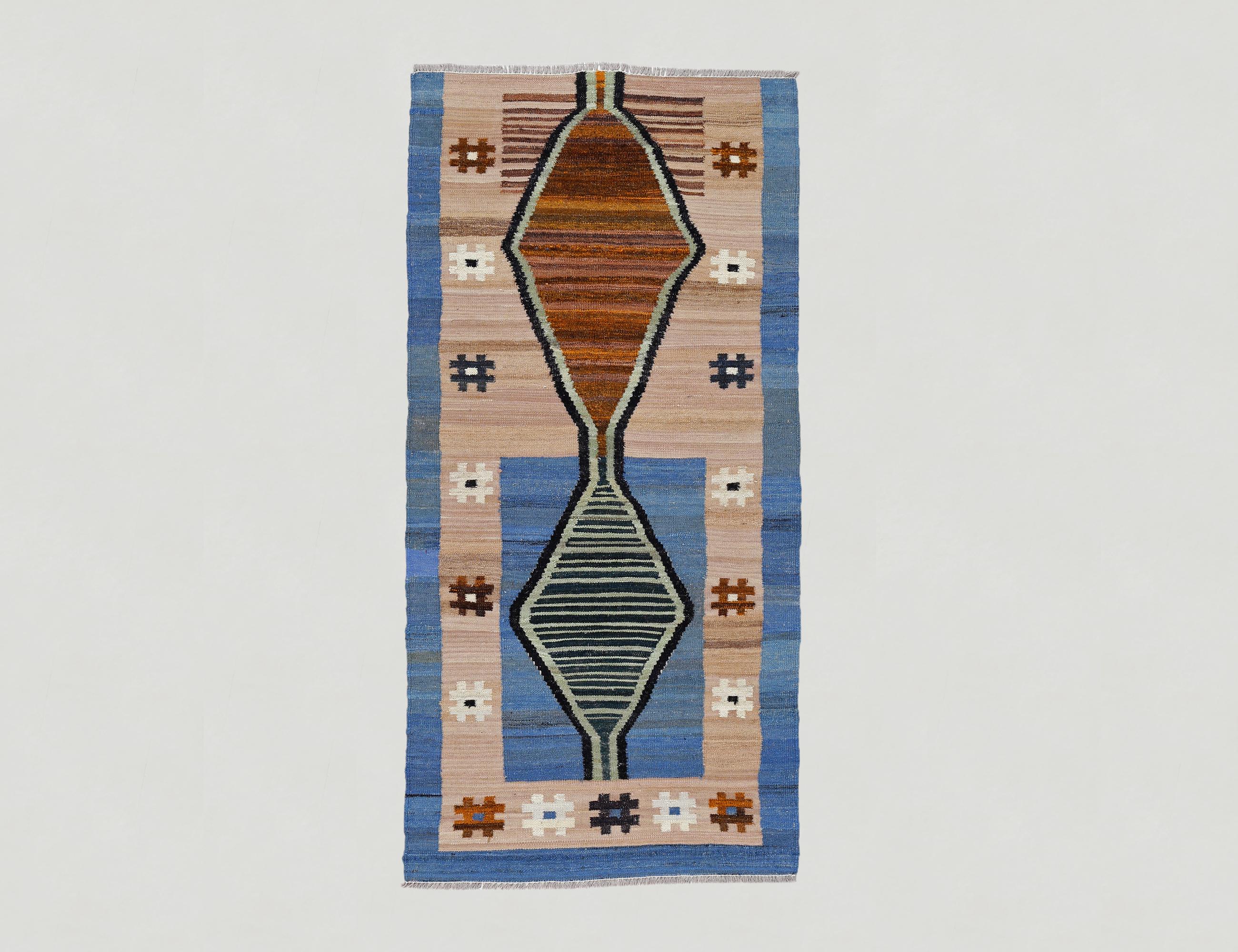
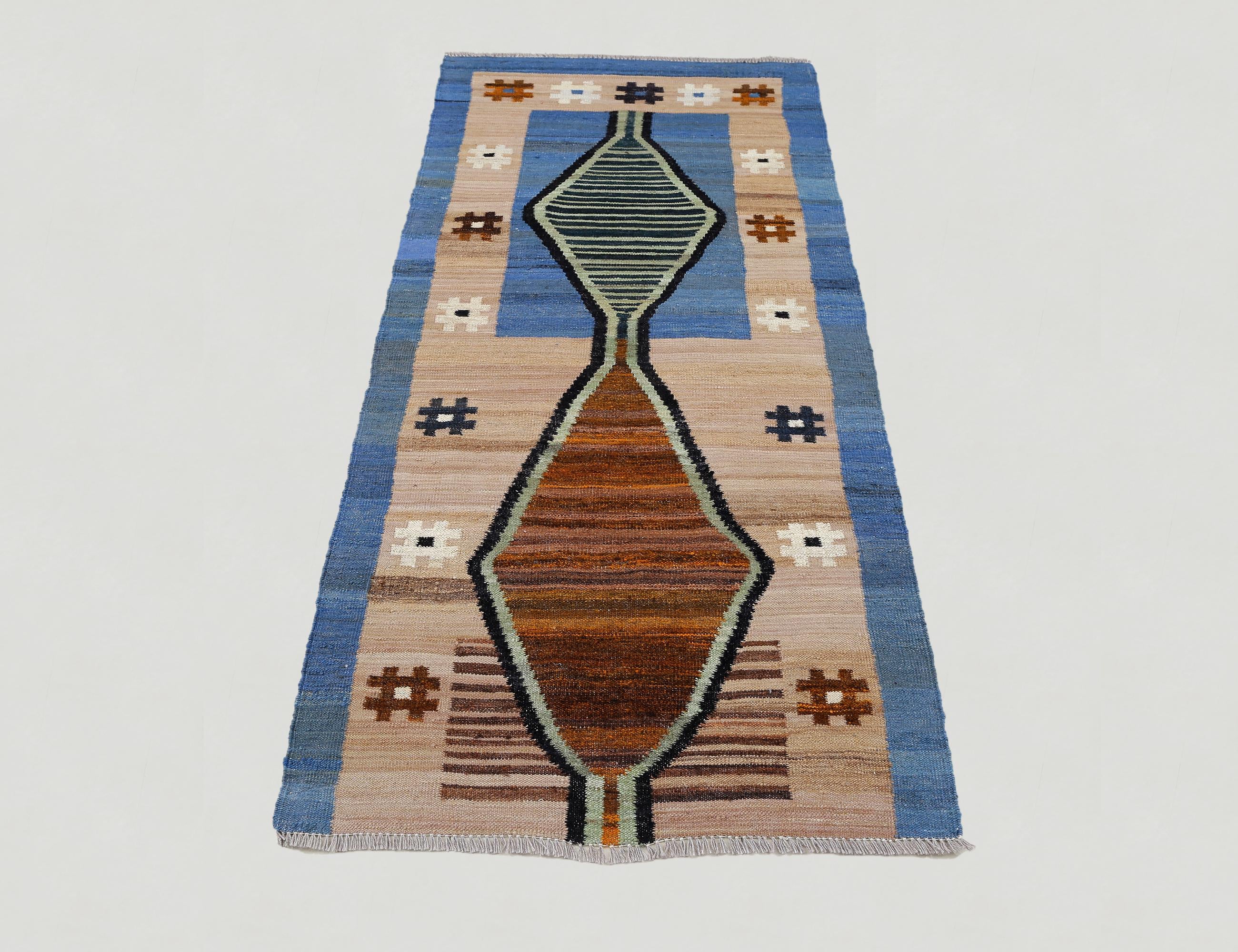
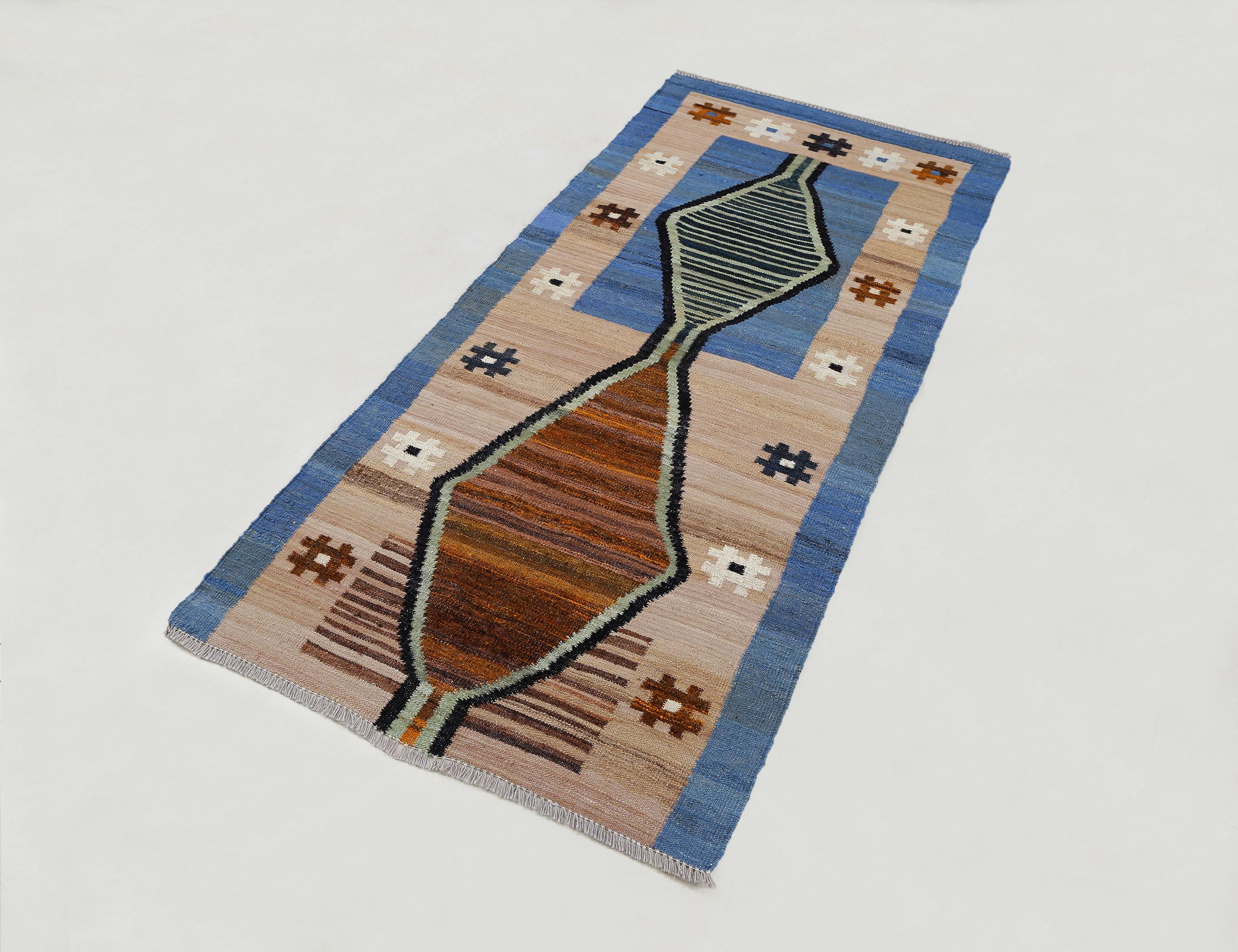
Vintage Afghan Kilim Runner 2x6.6 ft (201 x 97 cm) – Handwoven Wool Hallway Rug in Blue & Earth Tones, Mid Century Modern Geometric Design
$244.00 $610.00
This one-of-a-kind vintage kilim runner brings together tribal craftsmanship and a distinctly mid-century modern sensibility. Handwoven in wool with a bold abstract motif and soft denim-blue border, it’s the kind of piece that instantly transforms a hallway, entry, or kitchen into a curated design moment.
Lightweight yet durable, this flat-weave runner was made to be used and enjoyed every day – adding colour, texture, and history to contemporary interiors from boho lofts to clean Scandinavian-inspired homes.
Weaving tradition & construction
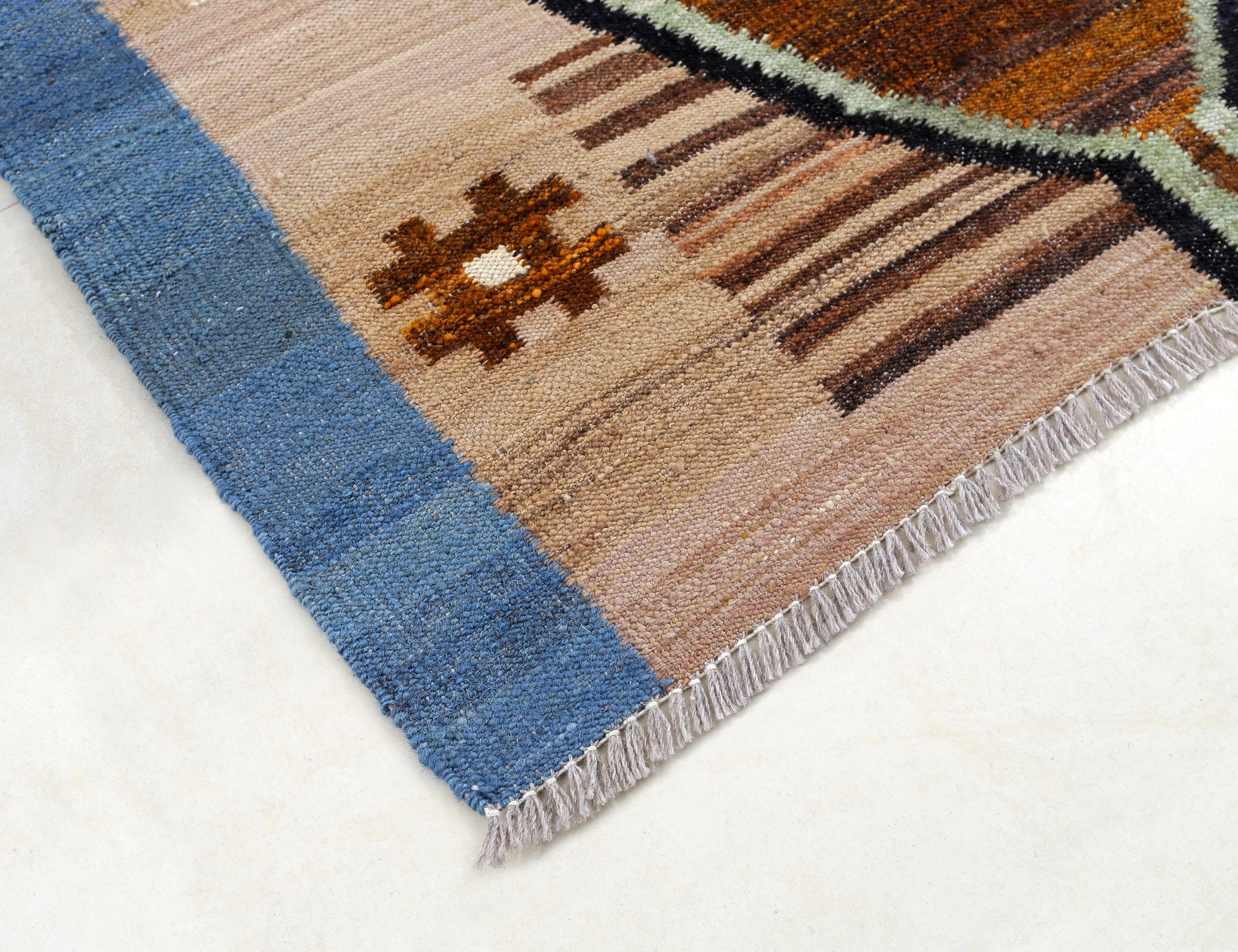
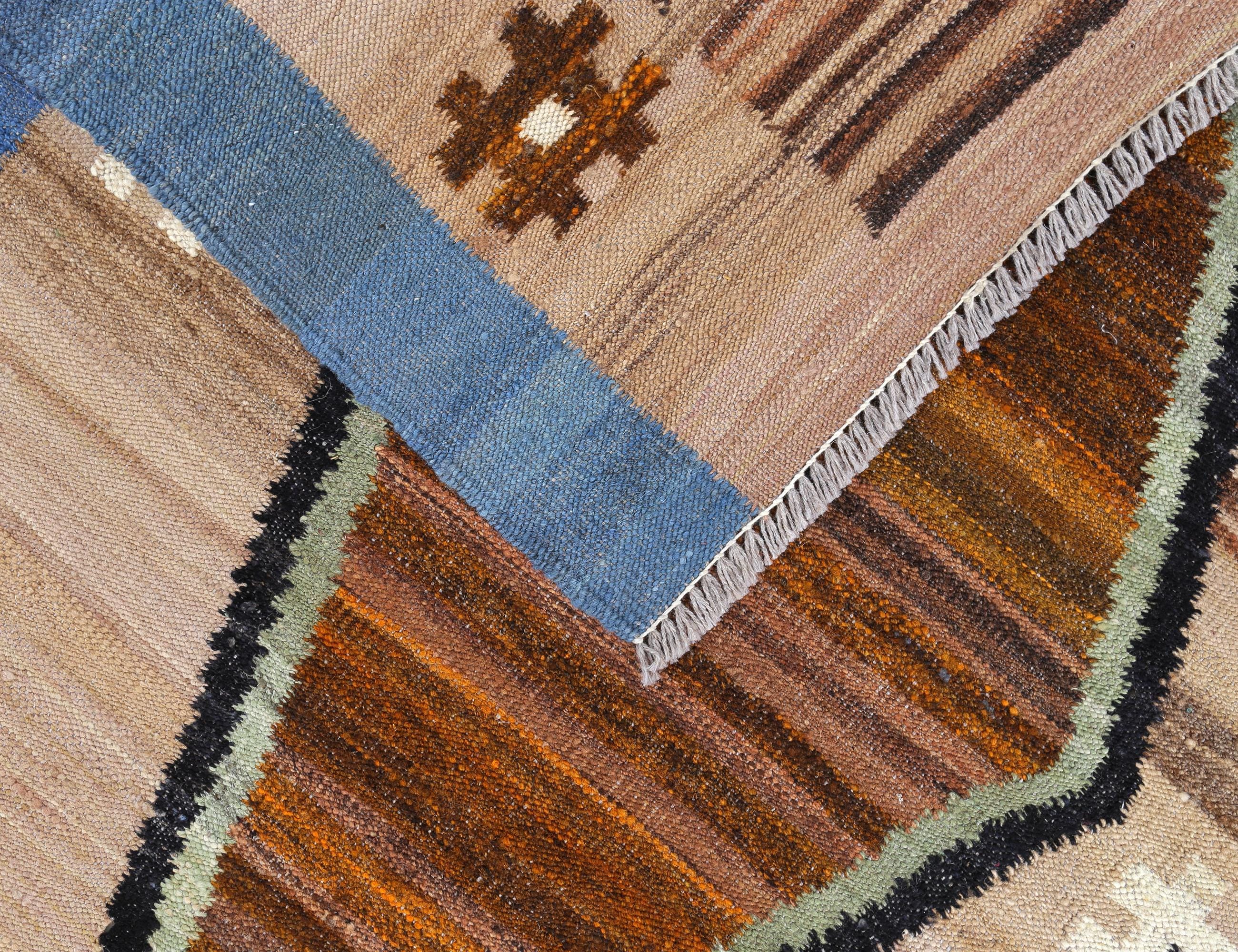
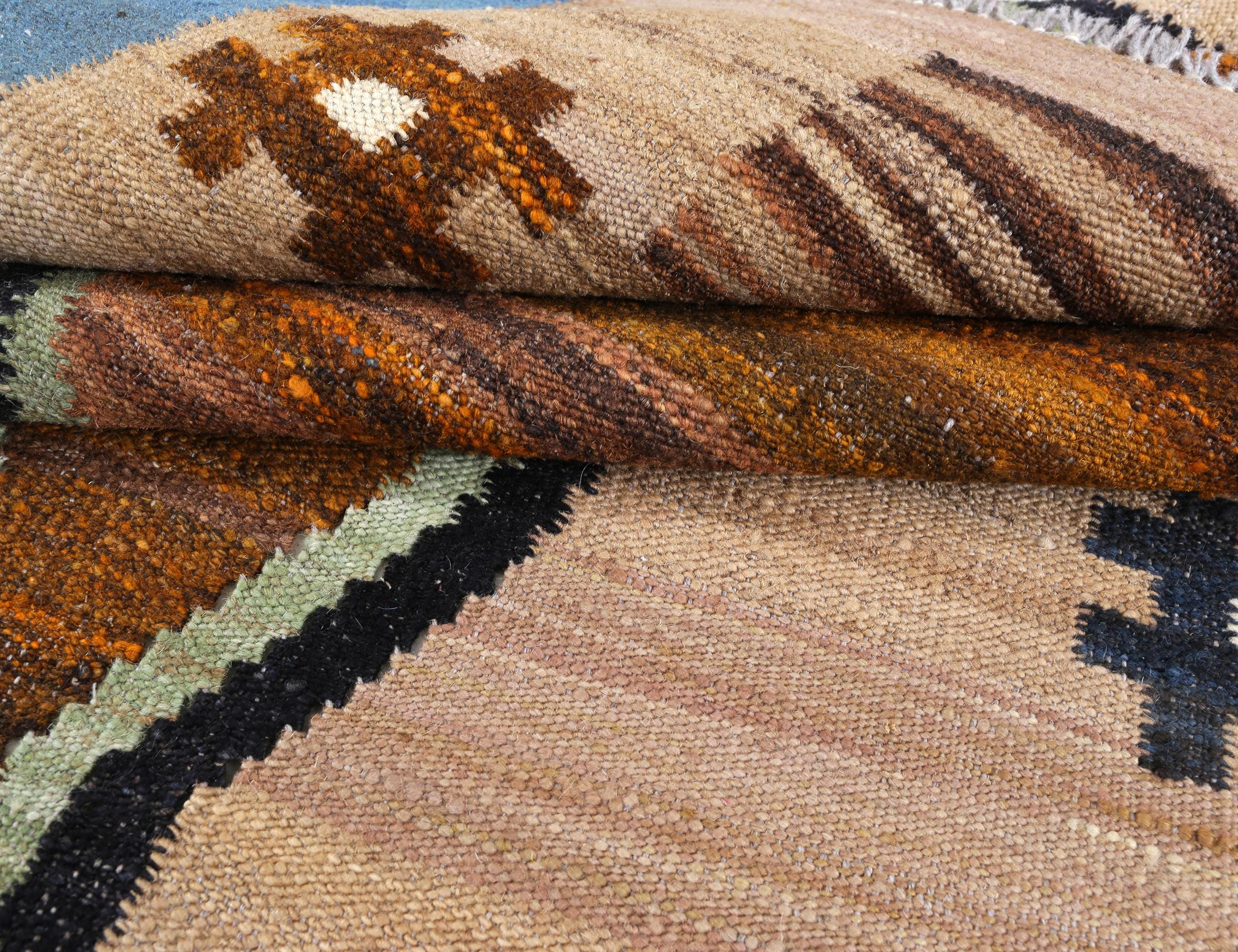
From the structure visible in the close-ups, this is a handwoven kilim (flat-weave) rather than a piled rug. The weft threads fully cover the warps, creating a tapestry-like surface with crisp colour blocks and the characteristic tiny “steps” along diagonal lines. There is no knotted pile, so questions of Turkish vs. asymmetrical knot don’t apply here – the pattern is built purely by interlocking coloured wefts in a traditional slit-tapestry kilim technique.
The handle looks supple but sturdy, with a relatively tight, medium-fine tribal weave (approximately 4–5 weft rows per cm / 10–12 per inch, estimated from the macro shots). The fringes are formed from the warp ends, another hallmark of authentic hand-loom production.
Regional origin & age
The colour palette (soft blues, sandy beiges, camel, tobacco brown, moss green, cream, charcoal) and the abstract central totem-like medallions are highly consistent with late 20th-century Afghan tribal and village kilims, many of which experimented with more modern, graphic layouts while still using traditional looms and wool. The blue border with scattered cross-like “hash” devices repeats motifs seen in Central Asian weavings.
Wear patterns are gentle and even: light abrash (natural variation) in the blues and browns, softening of some lighter areas, and no visible structural damage. This suggests a vintage piece, likely woven around the 1970s–1990s, used and cared for rather than stored unused.
Materials
Pile / surface: hand-spun wool (you can see the subtle irregularity and lustre in the close-ups)
Foundation: most likely wool warps and wefts, typical for Afghan tribal kilims (no cotton warps are visible at the fringe)
Dyes: the gentle abrash and warm, slightly muted tones strongly suggest natural and/or early synthetic dyes rather than harsh modern chemical colours.
Design, naqsha & motifs
The layout is a modern re-imagining of classic tribal forms:
Two elongated, mirror-image central figures – one filled with horizontal brown striations, the other with narrow green and black stripes – evoke a totem or stylised vessel. This gives a strong vertical rhythm perfect for corridor spaces.
The surrounding blue field and beige inner border create a graphic frame that grounds the composition.
Scattered within the frame are small cross/hash motifs, each with a contrasting centre. These echo protective and ornamental symbols seen across Central Asian textiles, often interpreted as stylised flowers, stars, or good-luck signs.
Rather than a traditional multi-border system, the weaver chose a single broad border, pushing the runner toward a minimalist, mid-century aesthetic while still being rooted in tribal language.
There are no visible maker’s marks or signatures, which is common for village and nomadic work where the identity of the weaving family is known locally rather than signed for export.
Condition
Overall very good vintage condition
Even surface with no noticeable holes, tears, or major repairs
Selvedges and fringes intact with only light age-appropriate wear
Some abrash (subtle colour shifts) and tiny irregularities in the weave, celebrated by collectors as proof of its handmade character
Clean and ready to place – minor age patina consistent with an authentic vintage piece.
Time investment for a runner of this size and fineness would be several weeks of full-time weaving for an experienced artisan, not counting wool preparation and dyeing.
Features:
Type: Handwoven kilim (flat-weave rug)
Origin: Afghanistan / Central Asian tribal weaving tradition
Age: Vintage, approx. 30–50 years (c. 1970s–1990s, estimate)
Size: 201 cm x 97 cm
approx. 6 ft 7 in x 3 ft 2 in
Material: 100% wool (pile/surface and likely foundation)
Weave: Flat-weave slit-tapestry, medium-fine density (~4–5 weft rows per cm)
Pile height: Flat (no pile)
Colours: Denim and sky blue, sand, beige, camel, tobacco brown, moss/olive, mustard, ivory, charcoal black
Construction: Hand-loomed, tribal/village workshop
Condition: Very good vintage; minor age patina and abrash, structurally sound, no major repairs observed.
Handwoven vintage Afghan kilim runner – authentic, not machine-made
Unusual mid-century modern abstract design with tribal roots
Soft blues and earth tones that work beautifully with contemporary interiors
Flat-weave construction: lightweight, reversible and easy to move
Ideal hallway, entryway or kitchen runner at 201 x 97 cm (6'7" x 3'2")
Durable wool on wool structure, made to last for decades with proper care
Beautiful abrash and subtle irregularities that add depth and character
Ethically handmade, each piece supporting traditional weaving communities.
Care Instructions
Vacuum regularly with gentle suction, no beater bar, to remove dust and grit.
Rotate every few months to promote even wear and fading.
Blot spills immediately with a clean, dry cloth – do not rub.
For deeper cleaning, use a rug specialist familiar with handwoven wool kilims; avoid steam cleaning or harsh chemicals.
If storing, roll (never fold) with the design facing inwards and keep in a dry, ventilated place, away from direct sunlight and moisture.
This striking runner is more than a floor covering – it’s a piece of living textile art, carrying the touch and rhythm of the weaver’s hands. Whether you style it in a long hallway, beside a bed, or in front of a favourite bookcase, it will bring warmth, colour, and an unmistakably human story into your home.
If this vintage Afghan kilim speaks to you, don’t wait too long – each piece is unique, and once it’s gone, it cannot be repeated.
Shipping from Pakistan
Processing time
5-7 business days
Customs and import taxes
Buyers are responsible for any customs and import taxes that may apply. I'm not responsible for delays due to customs.
Payment Options
Returns & Exchanges
I don't accept returns, exchanges, or cancellations
But please contact me if you have any problems with your order.